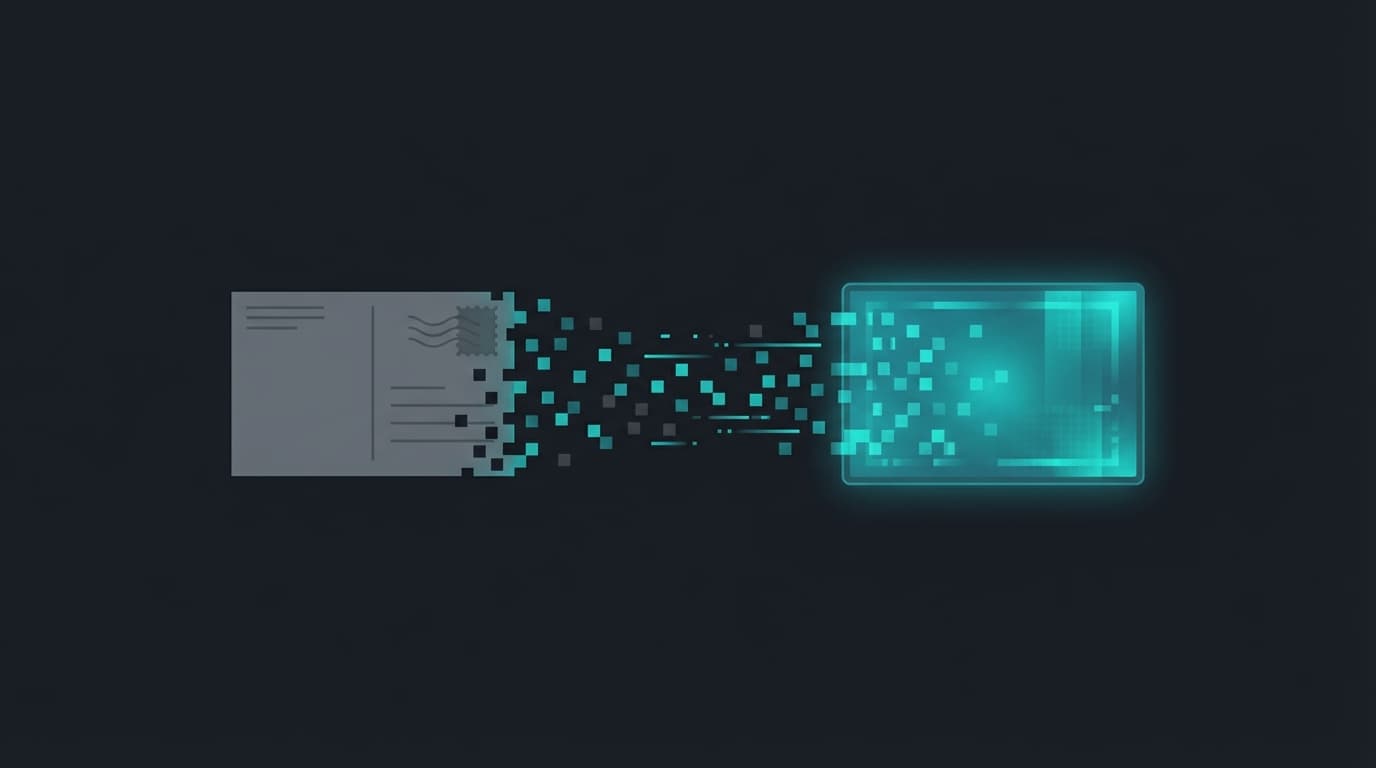
Digital Ads vs Postcards: Which Gets More Listings?
Digital Ads vs Postcards: Which Gets More Listings?
Every real estate agent farming a neighborhood eventually asks the same question: should I keep spending on postcards, or move that budget to digital ads?
It is not a simple answer. Postcards have been the default farming tool for decades, and plenty of agents swear by them. Digital advertising offers targeting and measurement that print cannot match. Both cost real money, and the wrong choice means months of wasted spend in an area where you are trying to build presence.
This article compares digital ads and postcards across the metrics that actually matter for farming: cost per household, impression frequency, measurability, and long-term effectiveness. The goal is not to declare a winner. It is to give you the data you need to make a smart decision for your farm area and budget.
What you'll learn:
- Real cost breakdowns for postcards vs. digital ads on a 200-home farm
- How impression frequency compares between the two channels
- What you can (and cannot) measure with each approach
- When to use one, the other, or both
Reading time: 13 minutes
The Case for Postcards
Before comparing, it is worth understanding why postcards have lasted this long in real estate marketing. They are not outdated by accident.
Tangibility and Trust
A postcard is a physical object. It arrives in a mailbox, gets held in someone's hands, and sits on a kitchen counter. According to USPS consumer research, 74% of consumers say they trust print marketing more than online advertisements. There is something about a physical piece of mail that feels more personal and less intrusive than a banner ad on a website.
For farming specifically, a well-designed Just Listed or Just Sold postcard delivers a clear message: this agent is active in your neighborhood. It is simple, immediate, and requires no technology to consume.
High Open Rates
Direct mail achieves open (or "read") rates around 42% to 90%, depending on the study and how you define "opened." Compare that to email marketing at roughly 20% open rates or digital display ads where viewability rates hover around 50% to 70%. People at least glance at their mail, even if most of it ends up in the recycling.
Familiarity
Agents know how postcards work. The process is straightforward: design, print, mail. No learning curve. No login dashboards. No click-through rate reports to decipher. For agents who are not digitally inclined, postcards are the path of least resistance.
The Case for Digital Ads
Digital advertising for farm marketing is newer territory for most agents. But the advantages are significant once you understand how the technology works.
Household-Level Targeting
The biggest difference between digital ads and postcards is targeting precision. With postcards, you mail to every address in a carrier route or area. You cannot easily exclude rentals, recent sales, or homes outside your target streets without increasing per-piece costs.
Programmatic digital advertising targets at the household level. You provide a list of specific addresses, and ads are served to the devices associated with those homes. If your farm has 200 homes but 30 are rentals, you can exclude those 30 and focus your budget on the 170 homeowner-occupied properties that represent actual listing potential.
Impression Frequency
This is where the comparison gets dramatic. A postcard delivers one impression per household per mailing. That is it. One moment of attention.
Household-level digital ads deliver hundreds of impressions per month to each home. At a mid-tier campaign, each household might see your ads 320 times in a single month across their phones, tablets, laptops, and connected TVs. Over a year, that is 3,840 digital impressions versus 12 postcard touches (assuming monthly mailings).
The average household has approximately 2.5 people using about 2.5 devices each. Your ads follow members of that household across the internet throughout their day: morning news sites, social apps, streaming platforms, recipe blogs. This consistent presence builds the familiarity that farming depends on.
Full Measurement
Every digital impression is tracked and reported. You know exactly how many times each household saw your ad, on which types of devices, and at what frequency. If you are spending $600 per month, you can see that it generated 64,000 impressions across 200 households.
Try getting that kind of reporting from a postcard mailing. You cannot. The postcard goes into the mailbox and disappears into the unknown. Did the homeowner read it? Was the homeowner even home that day? There is no way to know.
Cost Efficiency at Scale
Digital ads can reach the same household dozens of times for what a single postcard costs. At $3 per home per month for programmatic ads, you are paying the same as one postcard mailing but delivering 320 impressions instead of one.
The Real Cost Comparison
Let's get specific with a 200-home farm area and compare the actual numbers.
Postcards: Monthly Costs
| Item | Cost |
|---|---|
| Design (amortized) | $0.10 per piece |
| Printing | $0.25 to $0.50 per piece |
| Postage (USPS first-class) | $0.62 per piece |
| Total per piece | $0.97 to $1.22 |
| Monthly cost (200 homes) | $194 to $244 |
| Annual cost (12 mailings) | $2,328 to $2,928 |
What you get: 200 impressions per mailing (one per household). 2,400 total impressions per year. Zero tracking.
Digital Ads: Monthly Costs
Standard tier ($1.50 per home per month):
- Monthly cost: $300
- Impressions per household: ~160 per month
- Annual cost: $3,600
- Annual impressions per household: 1,920
Enhanced tier ($3 per home per month):
- Monthly cost: $600
- Impressions per household: ~320 per month
- Annual cost: $7,200
- Annual impressions per household: 3,840
Budget-matched comparison ($200 per month on digital):
- Impressions per household per month: ~107
- Annual impressions per household: 1,284
- That is still 107 times more monthly presence than a postcard, at the same budget.
Cost Per Impression
Here is where the math really separates the two channels.
Postcards: At $1.10 per piece (mid-range), your cost per impression is $1.10. One impression costs one dollar and ten cents.
Digital ads (enhanced tier): At $600 per month for 64,000 impressions, your cost per impression is $0.009. Less than one cent.
That is a 122-to-1 difference in cost per impression. For the price of reaching one household once with a postcard, you could reach that same household with a digital ad 122 times.
Now, a digital impression and a postcard impression are not the same thing. A postcard gets held in someone's hands. A digital ad gets a fraction of a second of screen time. But the compounding effect of seeing the same face and name hundreds of times per month creates a different kind of impact than a single piece of mail that gets a five-second glance.
Where Postcards Still Win
Digital ads are not better in every scenario. There are specific situations where postcards remain the stronger choice.
Just Listed and Just Sold Announcements
When you list or sell a home in your farm area, a targeted postcard to the surrounding 50 to 100 homes is still highly effective. It is timely, specific, and carries social proof. "Your neighbor's home just sold for $50,000 over asking" gets attention in a way that a generic digital ad cannot replicate.
These transactional postcards work best as supplements to ongoing marketing, not as your entire farm strategy.
Older Demographics
In farm areas with a high concentration of residents over 65, direct mail may get more attention than digital ads. While internet usage among older adults has grown significantly, some demographics still engage more with physical mail. If your farm skews older, factor that into your channel mix.
Initial Introduction
When you are brand new to a farm area, an introductory postcard can make a strong first impression. Something personal ("I live three blocks away and specialize in this neighborhood") carries more weight in physical form. Once you have made that introduction, digital ads can take over the ongoing visibility work at a fraction of the cost.
Where Digital Ads Win
In most farming scenarios, digital ads provide advantages that postcards simply cannot match.
Long-Term Brand Building
Farming is a long game. It takes 6 to 12 months of consistent presence before homeowners start associating your name with their neighborhood. Digital ads deliver the frequency needed to accelerate that recognition. Three hundred impressions per month builds familiarity faster than one postcard per month.
Agents running household-level programmatic campaigns typically report hearing "I see you everywhere" from homeowners within 60 to 90 days. That kind of recognition would take years with postcards alone.
Budget Accountability
Every dollar spent on digital ads produces a measurable result. You know exactly how many impressions were delivered, to which households, on which devices. If your campaign underperforms, you can see it in the data and adjust.
With postcards, the only feedback loop is whether your phone eventually rings. If it does not ring, was it because the postcards were ineffective, because the design was wrong, because the timing was off, or because homeowners threw them away? You will never know.
Targeting Flexibility
Want to remove a home from your list because it just sold? Done instantly with digital. Want to add 50 new homes to your farm? Updated within days. Want to increase frequency before spring selling season? Adjust your tier.
Postcards require a new print run for every change. Removing 10 addresses from a 200-home list still means reprinting and re-addressing the entire batch if you use a mail house, or manually sorting if you do it yourself.
Multi-Device Presence
A postcard sits in one place. Digital ads follow people across their phones, tablets, computers, and smart TVs. The homeowner who sees your face on their morning news app, their lunch break social scroll, and their evening streaming session has a qualitatively different level of awareness than the homeowner who saw your postcard on Tuesday.
The Honest Answer: It Depends on Your Situation
After all the data, the answer to "which gets more listings" is not one or the other. It depends on three things.
Your Budget
If you are spending $200 per month on farming, you need to choose the channel that gives you the most presence. At that budget, digital ads deliver dramatically more impressions per household than postcards. You are not choosing between one postcard and one digital ad. You are choosing between one postcard per month and 107 digital impressions per month, for the same money.
If you have a larger budget ($500 or more per month), a blended approach becomes viable. Run digital ads continuously for daily presence and send postcards quarterly for the physical touch point.
Your Farm Area Demographics
A neighborhood full of young professionals who spend six hours a day on their phones will respond to digital ads. A retirement community where residents check their mailbox every afternoon might respond better to postcards. Know your audience.
Your Ability to Measure
If you are the type of agent who wants to see exactly where your money goes, digital ads are the clear choice. If you are comfortable with the "send it and hope" model of postcard marketing, and you have been doing it long enough to feel confident it works, postcards may be fine.
But consider this: if you switched from postcards to digital and your listings stayed the same (or improved), you would know for certain that the postcards were not the driving factor. With digital, you would also have data to optimize. With postcards, you would still be guessing.
A Practical Approach: How to Test the Transition
If you are currently spending on postcards and considering a shift to digital, here is a low-risk way to test.
Month 1 to 3: Run both channels.
- Continue your current postcard schedule
- Add digital ads at the standard tier ($1 to $2 per home per month)
- Total additional cost: $200 to $400 per month for a 200-home farm
Month 3: Evaluate the digital data.
- Review impression delivery per household
- Note any "I see you everywhere" feedback from homeowners
- Track any listing calls from the farm area
Month 4 to 6: Reduce postcard frequency.
- Switch from monthly postcards to every other month
- Redirect the savings to increase your digital tier
- Your impression frequency per household increases while your total spend stays flat
Month 6: Make a data-driven decision.
- Compare your farm area activity (listings, calls, recognition) to the same period the prior year
- Review your digital impression data
- Decide whether to go fully digital, maintain a blend, or return to postcards
This approach lets the data guide you instead of making a blind leap. You never fully abandon one channel until you have proof that the other is working.
Campaign results vary based on market conditions, farm area characteristics, and campaign duration. The comparisons above use typical industry cost ranges and should not be interpreted as guaranteed outcomes.
Frequently Asked Questions
Are real estate postcards still effective in 2026?
Postcards still have value, particularly for Just Listed and Just Sold announcements and in markets with older demographics. Where they fall short is in frequency and measurability. One touch per month with zero tracking makes it difficult to justify a large ongoing budget when digital alternatives deliver hundreds of impressions per household for comparable cost.
What is the response rate for real estate postcards?
Industry data shows direct mail response rates averaging 3.3% to 4.4% for real estate, depending on the source and type of mailing. However, "response rate" for farming postcards is harder to pin down because farming aims for long-term recognition rather than immediate response.
Can I target specific addresses with digital ads?
Yes. Household-level programmatic advertising targets specific addresses by matching them to the devices used in those homes. This is different from Facebook or Google ads, which target based on interests or demographics. Platforms like VeryTargeted specialize in this address-level targeting for real estate agents, with pricing starting at $1 per home per month.
How many impressions per month do I need for digital farming to work?
Industry benchmarks suggest 150 to 300 impressions per household per month for effective brand awareness. The more impressions, the faster recognition builds. At 320 impressions per month, most agents report homeowners mentioning their ads within 60 to 90 days.
Should I stop postcards completely?
Not necessarily. Many agents find the best results come from a blended approach: digital ads running continuously for daily presence and quarterly postcards for the physical touch point. The combination costs less than monthly postcards alone while delivering significantly more total impressions.
The Bottom Line
Digital ads vs postcards for real estate is not a binary choice. But if you are forced to pick one channel for farming, the math favors digital. More impressions per dollar, full tracking on every ad served, the ability to target specific households, and the flexibility to adjust your campaign in real time.
Postcards give you a physical presence that digital cannot replicate. They work for targeted announcements and in specific demographic scenarios. But as a primary farming tool, their one-touch-per-month frequency and zero measurement make them increasingly hard to justify as a standalone strategy.
Start by testing. Run a digital campaign alongside your current postcards for 90 days. Let the data tell you what is working. That is the approach of an agent who manages their marketing budget like a business investment, not a monthly expense they hope pays off someday.
Ready to target the right households?
Stop wasting ad spend on people who will never list. VeryTargeted puts your brand in front of the homeowners most likely to sell.